Urinary Incontinence:
Regain Control. Live Freely.
Leaking urine when you laugh, sneeze, cough, or exercise isn't something you just have to accept. It's not an inevitable part of motherhood or ageing. It's a treatable condition — and many women see meaningful improvement with the right pelvic floor program within 8–16 weeks.
How Common Is This — Really?
Urinary incontinence is one of the most common conditions affecting women — and one of the least talked about. Embarrassment, the assumption that it's "just normal after babies," and not knowing that effective non-surgical treatment exists all stop women from getting help that genuinely works.
Understanding Your Type of Incontinence
Stress Incontinence
Leakage triggered by activity, coughing, sneezing, or laughing. The pelvic floor can't generate enough force to counteract sudden pressure. Often responds well to targeted pelvic floor training.
Urge Incontinence
A sudden, intense urge to urinate that's hard to suppress — sometimes with leakage before you reach the bathroom. Treated with bladder retraining and pelvic floor coordination work.
Mixed Incontinence
A combination of stress and urge leakage — the most common presentation in women. Both components are addressed together in our integrated program.
Postpartum Incontinence
Leakage that starts or worsens after childbirth from pelvic floor trauma. Earlier treatment may help recovery — don't wait for your 6-week check.
What We Do at Ataha Wellness
Physiotherapy-led pelvic floor rehabilitation is a recommended first-line treatment for urinary incontinence — recommended by major urological and gynaecological guidelines. Surgery is usually considered only after conservative treatment.
Pelvic Floor Assessment
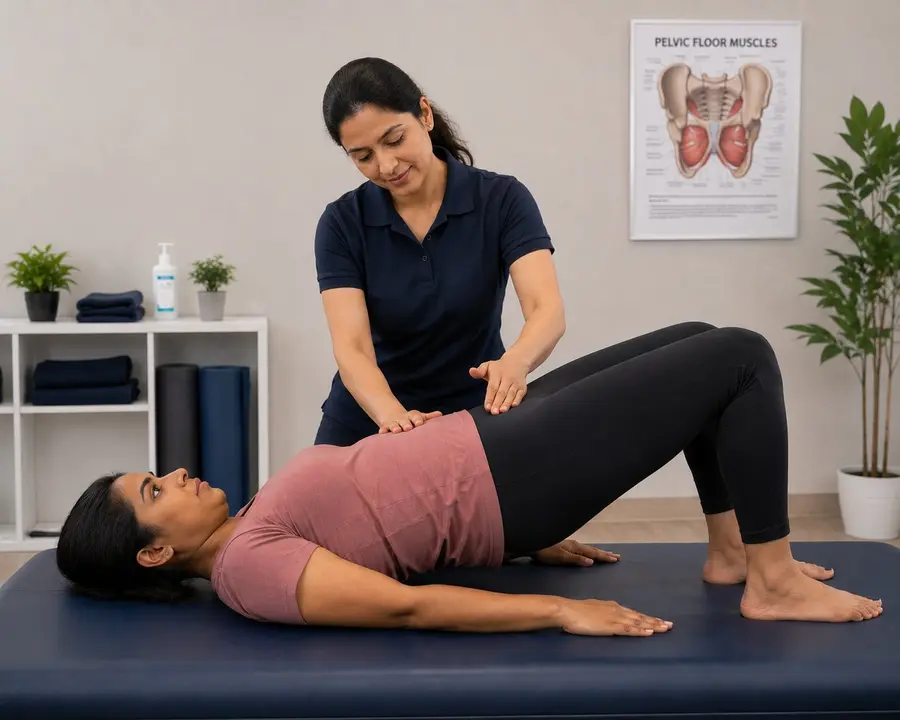
We assess muscle strength, coordination, timing, and endurance — not just "can you squeeze." This tells us exactly what type of retraining your pelvic floor needs.
Targeted Exercise Program
Evidence-based pelvic floor muscle training, tailored to your specific impairment and progressed over 8–16 weeks with maintenance to support results.
Bladder Retraining
For urge and mixed incontinence — practical strategies to extend time between voids, reduce urgency, and regain control through habit and technique.
Lifestyle & Diet Guidance
Fluid intake, caffeine, dietary triggers, and weight all affect incontinence. We give you evidence-based, Indian lifestyle–friendly advice that actually makes a difference.
Functional Exercise Coaching
Getting back to exercise, yoga, or sport without leakage — with the specific techniques and progressions to make it happen safely.
Acupuncture for Bladder Control
Some evidence suggests acupuncture may help urge symptoms — offered as a complement to physiotherapy.
Incontinence FAQ
It's common — but not normal or inevitable. The pelvic floor can be damaged during childbirth, and leakage is a sign of that damage. It's not something to quietly accept. The sooner you start, the better the outlook generally is.
Yes — when done correctly and consistently. The problem is that up to 50% of women perform Kegels incorrectly without guidance, often bearing down rather than lifting up. Our physiotherapists assess your technique and give you the specific program your pelvic floor actually needs.
Many women achieve good continence through physiotherapy alone. Surgery is only considered when conservative treatment has been properly completed and symptoms remain severe. We always aim for the best result without surgery first.
In our experience, many women notice real improvement within 8–16 weeks of consistent pelvic floor training. Individual results vary. A maintenance phase follows to help maintain your gains.
Stop Managing It. Start Treating It.
A consultation at our Somajiguda clinic gives you a clear picture of what's causing the leakage and a realistic plan to address it. Pads don't have to be permanent.
Looking for specialised pelvic rehabilitation?
Learn about our Female Pelvic Rehab Programme →