Breathe Better. Move Better.
Live Better.
Living with COPD or asthma can make walking, climbing stairs, working and everyday activities harder than they should be. Our respiratory rehabilitation is a structured, physiotherapist-led program that combines supervised exercise training, breathing techniques and nutrition support for adult men and women in Hyderabad.
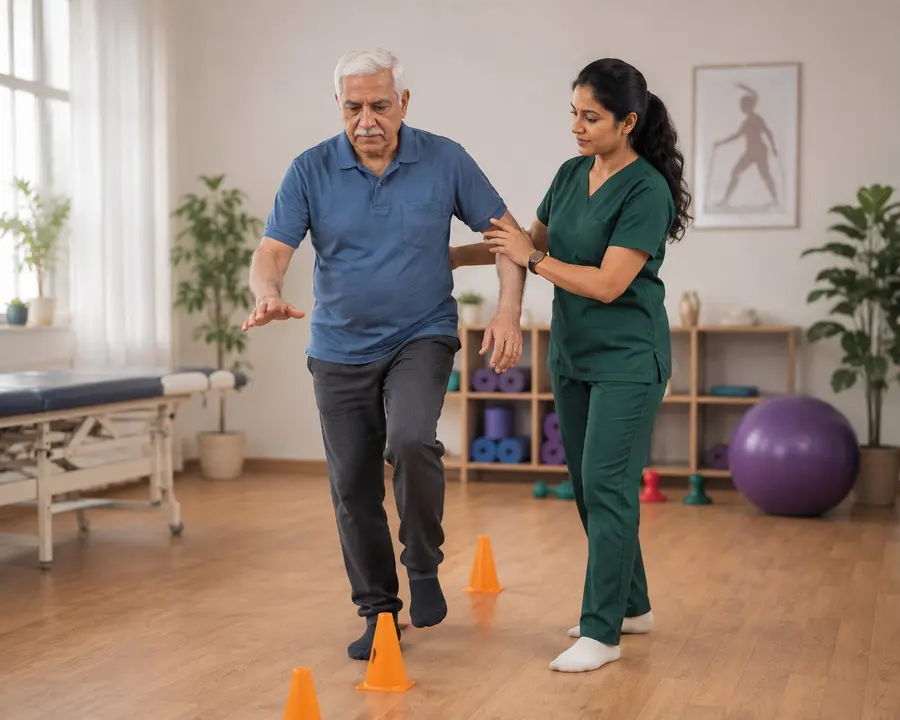
A Structured Program for Long-Term Lung Conditions
Pulmonary rehabilitation is a supervised program for people whose breathing condition limits what they can do. It focuses on the things that medicines alone do not address: physical conditioning, muscle strength, how you breathe during activity, and how confident you feel moving again.
Pulmonary rehabilitation is an evidence-based intervention recommended for people with COPD in international guidance, and research shows it can improve exercise capacity, reduce breathlessness and improve health-related quality of life.1–3
COPD and Asthma Rehabilitation
COPD Rehabilitation
Chronic Obstructive Pulmonary Disease (COPD), including chronic bronchitis and emphysema, can cause persistent breathlessness, coughing, fatigue and a steady drop in how much you can do. Our program focuses on:
- Improving exercise tolerance and physical conditioning
- Strengthening respiratory and peripheral muscles where indicated
- Improving functional capacity for daily activities
- Breathing control and symptom-management techniques
- Nutritional assessment and support
- Building a home exercise routine you can keep up
Asthma Rehab Support Program
Asthma can make people wary of exercise and everyday physical activity, particularly when symptoms are not well controlled. Our physiotherapy-led support program focuses on:
- Exercise tolerance and physical conditioning
- Breathing-pattern assessment and retraining where indicated
- Physical activity guidance
- Exercise-related symptom management
- Nutritional assessment where appropriate
The program is individualised according to your symptoms, functional limitations and medical assessment, and it works alongside your prescribed asthma treatment.
Learn more about the Asthma Rehab Support Program →From First Assessment to Progress Review
1. Initial Clinical Assessment
Every patient is assessed individually before starting. Depending on your condition, this may include the COPD Assessment Test (CAT), the Modified Medical Research Council Dyspnoea Scale (mMRC), the Borg Dyspnoea Scale, oxygen saturation, heart rate and blood pressure, and a physical, functional and nutritional assessment.
2. Supervised Physiotherapy
Individual sessions may include aerobic exercise training, resistance and strength training, respiratory physiotherapy, breathing exercises, gradual exercise progression and home exercise guidance.
3. Nutritional Support
Nutrition plays an important role in maintaining muscle strength and physical function. Our diet consultations look at nutritional status, body weight and BMI, dietary adequacy, muscle loss and nutritional risk, and your individual dietary needs.
4. Progress Assessment
Clinical measurements are repeated as your program progresses, so that changes in symptoms and functional performance can be tracked and your plan adjusted.

Adult Men and Women With
- Diagnosed COPD
- Chronic bronchitis or emphysema associated with COPD
- Medically assessed asthma
- Breathlessness during routine activities
- Reduced exercise tolerance
- Physical deconditioning associated with chronic respiratory disease
A Multidisciplinary Respiratory Care Team
Physiotherapy-led. Individually assessed. Progress monitored. Your program is delivered in-clinic by a team that brings together:
Respiratory Physiotherapists
Lead your assessment, breathing techniques and supervised exercise sessions.
Rehabilitation Specialists
Plan how your program progresses and track changes in function over time.
Exercise Therapists
Guide aerobic, strength and conditioning work at an intensity that suits you.
Clinical Nutritionists & Diet Consultants
Assess nutritional status, muscle loss risk and dietary needs, with Indian diets in mind.
Yoga Therapists
Support breathing awareness and relaxation as part of your overall plan.
Working With Your Doctor
We coordinate with your treating doctor where and when needed.
What the Research Shows
Research shows that pulmonary rehabilitation for COPD can:2,3
- Improve exercise capacity
- Reduce breathlessness
- Improve health-related quality of life
- Improve muscle strength and the ability to carry out daily activities
- Support better self-management of a chronic respiratory condition
For people with asthma, physical training has been shown to improve cardiopulmonary fitness and is generally well tolerated.5 Prescribed asthma treatment remains the foundation of care.4
Individual outcomes vary according to disease severity, other health conditions, adherence and participation in rehabilitation.
Frequently Asked Questions
Pulmonary rehabilitation is a supervised program for people living with long-term lung conditions such as COPD and asthma. It combines exercise training, breathing techniques, education and nutrition support to help you manage breathlessness and stay active in everyday life. At Ataha Wellness it is led by physiotherapists and planned around you after an initial assessment.
Yes. Pulmonary rehabilitation is strongly recommended for people with stable COPD in international guidance. Supervised exercise training and breathing techniques can improve exercise capacity, reduce breathlessness during activity and improve quality of life. It works alongside your medicines, not in place of them.
Yes. Adults whose asthma has been medically assessed can take part. The focus is on physical conditioning, breathing-pattern retraining where it is needed, and confidence with exercise. If your symptoms are not well controlled, we may ask you to see your doctor first so that exercise is safe for you.
For many people with COPD, yes. Research shows that structured pulmonary rehabilitation improves functional exercise capacity, which is usually measured by how far a person can walk. How much you improve depends on your condition, any other health issues, and how regularly you attend and keep up your home exercises.
Rehabilitation is not designed to reduce inhaler use, and it does not routinely do so. Any change to your inhalers or other medicines must be assessed and authorised by your treating doctor. Please do not stop or reduce your medicines on your own.
No. COPD is a long-term condition and there is no cure. Rehabilitation aims to improve your exercise capacity, physical function and day-to-day management of symptoms.
You should have a confirmed diagnosis from a doctor before you start. We encourage a referral from your treating pulmonologist or physician, and we coordinate with your treating doctor where and when needed.
Yes, as long as they are medically stable and suitable for exercise. Every person is assessed individually, and the type and intensity of exercise is adapted to what they can safely manage.
Yes. Keep taking all your prescribed medicines and inhalers exactly as your doctor has advised. Rehabilitation complements your medical treatment; it does not replace it.
Yes. You will be given a personalised home exercise program. Keeping it up between sessions, and after your clinic sessions end, is what helps you hold on to the benefits.
Yes. Pulmonary rehabilitation at Ataha Wellness is open to all eligible adult men and women.
Sources
- Global Initiative for Chronic Obstructive Lung Disease (GOLD). Global Strategy for the Diagnosis, Management, and Prevention of COPD: 2026 Report. goldcopd.org/2026-gold-report-and-pocket-guide/
- Rochester CL, Alison JA, Carlin B, et al. Pulmonary Rehabilitation for Adults with Chronic Respiratory Disease: An Official American Thoracic Society Clinical Practice Guideline. Am J Respir Crit Care Med. 2023;208(4):e7–e26. pubmed.ncbi.nlm.nih.gov/37581410/
- McCarthy B, Casey D, Devane D, et al. Pulmonary rehabilitation for chronic obstructive pulmonary disease. Cochrane Database Syst Rev. 2015;(2):CD003793. doi.org/10.1002/14651858.CD003793.pub3
- Global Initiative for Asthma (GINA). Global Strategy for Asthma Management and Prevention, 2026 update. ginasthma.org/2026-gina-strategy-report/
- Carson KV, Chandratilleke MG, Picot J, et al. Physical training for asthma. Cochrane Database Syst Rev. 2013;(9):CD001116. doi.org/10.1002/14651858.CD001116.pub4
Individual outcomes vary according to disease severity, other health conditions, adherence and participation in rehabilitation.
Book Your Respiratory Assessment
Message us on WhatsApp or call to arrange an initial assessment at our Somajiguda clinic.