Palsy Conditions:
Restoring Function, Rebuilding Confidence
Bell's Palsy, Erb's Palsy, and related nerve conditions can be deeply unsettling — affecting the face, arm, or movement in ways that touch daily life, work, and confidence. Our physiotherapists and acupuncturists have supported hundreds of patients through targeted nerve rehabilitation.
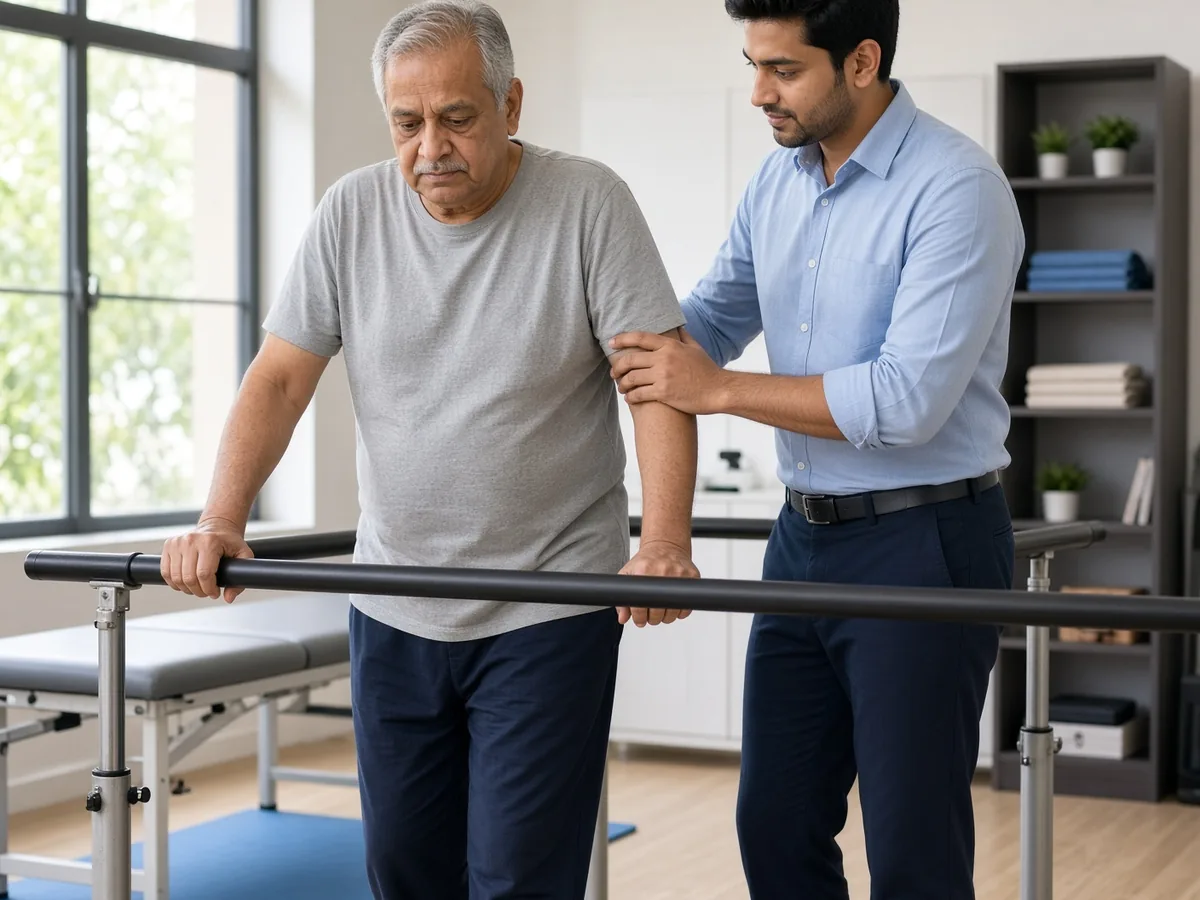
Palsy & Nerve Conditions We Specialise In
Bell's Palsy
Sudden facial weakness or paralysis due to facial nerve inflammation
Bell's Palsy is sudden weakness or paralysis of one side of the face, caused by inflammation of the facial nerve (cranial nerve VII). It typically develops over 48–72 hours and can cause mouth drooping, inability to close the eye, loss of taste, and facial asymmetry. Most cases resolve partially or fully, but some people recover incompletely; guided rehabilitation may help, and early assessment is recommended.
Physiotherapy addresses:
- Facial muscle re-education exercises — restoring voluntary control of specific facial muscles
- Neuromuscular retraining to prevent synkinesis (abnormal linked movements)
- Eye protection and lubrication guidance while the eye cannot close fully
- Massage techniques to reduce facial muscle tightness and contracture
- Mirror feedback exercises for motor relearning
Acupuncture for Bell's Palsy: Some studies suggest acupuncture may help recovery in Bell's Palsy, though the evidence is limited. See a doctor urgently first, as steroid treatment is most effective when started within 72 hours of onset.
Erb's Palsy
Brachial plexus injury causing arm weakness — in newborns or adults
Erb's Palsy results from injury to the upper brachial plexus — the network of nerves controlling arm movement. In newborns, it most commonly occurs during difficult deliveries when the neck is stretched excessively. In adults, it results from trauma such as road accidents, falls, or sports injuries. The result is weakness or paralysis of shoulder, elbow, and wrist movements.
Physiotherapy addresses:
- Range of motion exercises to prevent shoulder and elbow joint stiffness
- Strengthening of available muscle groups to compensate and support recovery
- Sensory stimulation and nerve mobilisation techniques
- Functional retraining — restoring the ability to use the arm for daily activities
- Positioning and splinting guidance to prevent contracture
- Parent training for infant Erb's Palsy — handling, positioning, and home exercises
Facial Palsy (Other Causes)
Facial weakness from stroke, tumour, trauma, or Ramsay Hunt Syndrome
Not all facial palsy is Bell's Palsy. Facial weakness can result from stroke (central facial palsy), Ramsay Hunt Syndrome (herpes zoster affecting the facial nerve), parotid gland surgery, acoustic neuroma removal, or trauma. The rehabilitation approach differs based on cause and the type of nerve involvement, but physiotherapy can support recovery alongside medical care.
- Post-stroke facial weakness — integrated into broader stroke rehabilitation program
- Ramsay Hunt Syndrome — facial retraining alongside antiviral medical treatment
- Post-surgical facial palsy — nerve recovery monitoring and muscle retraining
- Traumatic facial nerve injury — assessment of recovery potential and structured program
Brachial Plexus Injuries (Adults)
Nerve network injuries from trauma causing arm and shoulder weakness
Traumatic brachial plexus injuries — from motorbike accidents, contact sports, or industrial injuries — can range from mild stretching (neuropraxia, often recovering fully) to complete avulsion (root torn from spinal cord, requiring surgical consideration). Physiotherapy is an important part of care at all stages — preventing stiffness while nerves recover, rebuilding strength as recovery occurs, and maximising function when recovery is incomplete.
- Joint range of motion preservation during nerve recovery phase
- Strengthening program progressed as nerve recovery occurs
- Scar management for post-surgical cases
- Functional retraining and compensatory strategy development
- Coordination with neurosurgeon or orthopaedic specialist for complex cases
How We Treat Palsy Conditions
Nerve Rehabilitation Physiotherapy
Targeted muscle retraining, range of motion work, neuromuscular re-education, and functional exercises based on the specific nerve affected and stage of recovery.
Acupuncture for Nerve Recovery
May help support muscle activation and local circulation, used alongside physiotherapy and medical care. The evidence is limited.
Facial Muscle Re-education
Specific techniques for Bell's and facial palsy — mirror exercises, neuromuscular retraining, and synkinesis management to help improve facial symmetry and movement.
Home Program & Self-Management
Daily exercises, positioning guidance, and self-massage techniques for patients to practice between sessions — maximising the rehabilitation effort.
Palsy Conditions FAQ
Most people with Bell's Palsy recover well, often within a few months. Rehabilitation aims to support recovery and reduce complications such as synkinesis. Recovery depends on severity and how early you are assessed. Mild cases often resolve within 3–6 weeks. Moderate cases take 3–6 months. Severe cases may take longer and may benefit from early physiotherapy alongside medical treatment. An early start may help.
Seek physiotherapy assessment as soon as possible — ideally within the first few weeks of life. Most mild to moderate Erb's Palsy recovers well with early physiotherapy. We train parents to carry out daily exercises at home, which are an important part of recovery. Early intervention may help reduce the chance of long-term weakness or stiffness.
It may help. Some studies suggest acupuncture can support recovery in Bell's Palsy alongside medical treatment, though the evidence is limited. We use facial acupuncture points and distal points that may help support muscle activation. Acupuncture by a trained practitioner is generally considered low risk; please tell your doctor if you are having it alongside steroid treatment.
This varies significantly by condition and severity. Bell's Palsy: often a few weeks to a few months. Newborn Erb's Palsy: 3–12 months of consistent rehabilitation. Adult brachial plexus injuries: 6–24 months depending on the severity of nerve damage. We give realistic timelines at your initial assessment and review progress regularly.
Early Treatment Makes the Difference
For nerve conditions, timing matters significantly. Don't wait to see if it resolves on its own — book a consultation and understand your options.